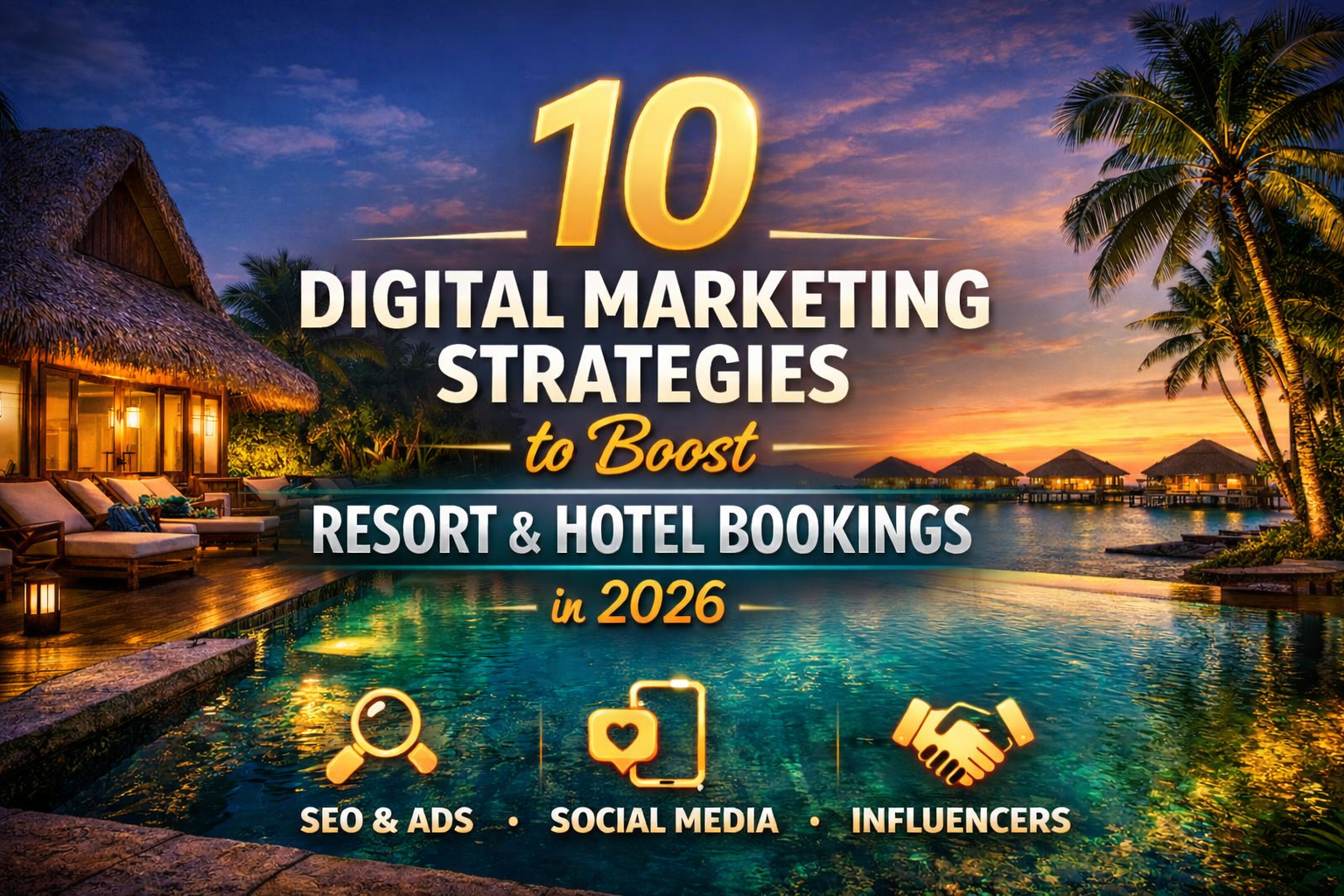
10 Digital Marketing Strategies to Boost Resorts & Hotel Bookings in 2026
The hospitality industry is evolving faster than ever. By 2026, resorts and hotels that rely only on OTAs, word-of-mouth, or seasonal offers will struggle to stay competitive. Guests today research deeply, compare experiences online, and book brands they trust digitally.
To increase direct bookings, brand visibility, and long-term profitability, here are the 10 most effective digital marketing strategies for resorts and hotels in 2026.
1. Shift Focus from OTAs to Direct Booking Channels
OTAs are useful—but they eat into your margins.
In 2026, successful resorts will:
- Invest in SEO-optimized websites
- Promote direct booking offers
- Use WhatsApp & website chat for instant inquiries
Goal: Reduce dependency on OTAs and increase direct revenue.
2. Google Business Profile Optimization Is Non-Negotiable
When guests search “resorts near Bangalore” or “luxury stay near Mysuru”, Google Business Profile decides who wins.
Key actions:
- Weekly posts with offers & events
- Regular photo & reel uploads
- Review management & responses
- Local keyword optimization
Local visibility = real bookings.
3. Hyper-Targeted Google Ads for High-Intent Travelers
In 2026, generic ads won’t work.
Winning resorts will run:
- Location-based Google Search Ads
- “Weekend getaway”, “corporate retreat”, “family resort” keywords
- Remarketing ads for website visitors
Only target users ready to book.
4. Instagram Reels & Short-Form Video Marketing
People don’t book rooms—they book experiences.
Use:
- Room walkthrough reels
- Pool, spa, food & adventure clips
- Guest experience videos
- Behind-the-scenes stories
Short videos create emotional buying decisions.
5. Influencer Marketing with ROI Tracking
Not all influencers bring bookings.
In 2026, resorts must:
- Partner with micro-influencers (travel & lifestyle)
- Track booking links & promo codes
- Focus on authenticity, not just followers
Quality reach > viral vanity metrics.
6. SEO Content That Answers Real Guest Questions
Instead of generic blogs, create intent-based content like:
- “Best weekend resort near Bangalore for couples”
- “Top corporate offsite resorts near Mysuru”
- “Family-friendly resorts with adventure activities”
SEO brings long-term, free bookings month after month.
7. WhatsApp Marketing for Instant Conversions
Guests want fast answers.
Use WhatsApp for:
- Inquiry follow-ups
- Package sharing
- Booking confirmations
- Festival & seasonal promotions
WhatsApp has the highest conversion rate in hospitality.
8. Personalized Email Marketing for Repeat Guests
Email is far from dead—if used correctly.
Resorts should:
- Segment guests (corporate, family, couples)
- Send exclusive loyalty offers
- Promote off-season packages
Repeat guests cost less and book faster.
9. Online Reputation Management (ORM)
In 2026, reviews are currency.
Strong ORM includes:
- Actively collecting Google reviews
- Responding professionally to negative feedback
- Showcasing testimonials on website & social media
A 1-star improvement can increase bookings by 15–20%.
10. Data-Driven Marketing & Performance Tracking
Guesswork kills growth.
Winning resorts track:
- Cost per booking
- Conversion rates
- Channel-wise ROI
- Seasonal performance
Data helps you scale what works and stop what doesn’t.
Final Thoughts
By 2026, resorts and hotels that invest in strategic digital marketing—not random ads—will dominate bookings, reduce dependency on third parties, and build powerful brands.
Digital success is no longer optional in hospitality—it’s the backbone of sustainable growth.
Helps Resorts Grow
At Digi Valley, we specialize in Resort & Hotel Digital Marketing, including:
- SEO & Google Business Optimization
- Google Ads & Lead Funnels
- Social Media & Reels Strategy
- Influencer & Brand Campaigns
- Website & Conversion Optimization
📞 Free Digital Audit & Consultation Available
Let’s discuss how your resort can increase bookings in 2026 and beyond.